Programme Mode
Full-Time
Duration

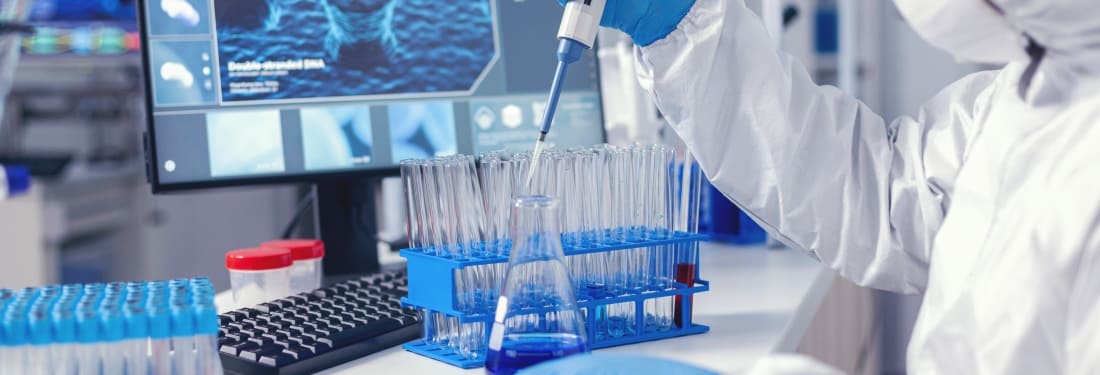
Medical Laboratory Science is a profession that is designed to provide a broad basis for fundamental scientific knowledge and its applications to the workings of the human body. It entails the study of human and animal tissues, body fluids, excretion and the product of biological processes for the purposes of diagnosis, treatment and research.
The courses offered are designed to expose the students to core areas like Clinical chemistry, Hematology, Histopathology, Medical Microbiology and Immunology/ Immunochemistry as well as Instrumentation. The practical aspect of the program prepares students to fit into any diagnostic laboratory in hospitals, research institute, food laboratories and other allied fields, or be self-employed.
The Medical Laboratory Science programme of Chrisland University is designed to train students who will have the requisite skills to function in various specialities in medical laboratory science. These include Medical Microbiology, Clinical Chemistry/Chemical Pathology, Hematology and Blood Transfusion Science, Histopathology, Histochemistry, Immunohistochemistry, Immunology, Parasitology, Molecular diagonistics and quality assurance among others. Candidates admitted into the program are expected to gain general knowledge in the first four years of their training. However at their final year, each student is expected to specialize in one of the areas of medical laboratory science.
Graduates from the B.Sc. Medical Laboratory Science program are well-prepared for careers in:
Admission into the B.MLS program shall be by University Matriculation Examination (UME) and Direct Entry modes.
a. University Matriculation Examination(UME)
Candidates must possess credit passes at the Senior Secondary School Examination conducted by West African Examination Council or National Examination Council or General Certificate Examination at the Ordinary Level or its equivalent in Mathematics, English Language, Physics, Chemistry and Biology at not more than two (2) sittings and an acceptable pass mark as designated by the Senate of Chrisland University at the UME conducted by the Joint Admission and Matriculation Board (JAMB).
b. Direct Entry
Candidates seeking admission through this mode should in addition to the UME requirements possess either of the following:
i) Passes in Physics, Chemistry and Biology or Zoology at the Higher School Certificates or Advance Level of General Certificate Examination or its equivalent. Such candidates shall also have the requisite 5 Level credits in the required subjects.
ii) Graduates in related subjects such as biology, zoology, microbiology, anatomy, physiology and biochemistry with at least second upper (2:2) degree shall be considered for direct entry admission into the program.
iii) Holder of Medical Laboratory Technician (MLT) certificate who possess requisite 5 O level credits shall also be considered for direct entry admission.
c. Transfer Candidates
Candidates from other Universities and Departments within the College of Basic Medical Science (COBAMS) can transfer to the Department of Medical Laboratory Science. However such candidates shall have CGPA of not less than 3.50 and acceptance into the Department shall be subject to available vacancy.
For detailed information on the general admission requirements, application guidelines, deadlines and required documents, please visit the Admissions page or visit the Undergraduates Admissions Portal.
Duration of Course
The B.MLS degree programme shall run for 5years for Joint Matriculation Examination entry candidates and 4 years for direct entry candidates.
Course Registration and Assessment
Each student shall register for all required courses at the beginning of the semester; and students shall be examined on all courses registered. Students shall not register in each semester more or less than the required number of credits needed for that semester.
Duration of Semester
Each semester of 15 weeks (exclusive of the Christmas and Easter vacation or Mid-semester breaks) shall normally be reserved for teaching and two weeks for examination. This is applicable to 100 and 200 level of the programme but for 300 to 500 level a semester is six (6) months, this will allow for Laboratory posting in the University Teaching Hospital. Each MLS course taught in the BMLS programme at the university may be evaluated for grading with the use of one or several of the following criteria:
Written examination which include problem solving:-
Continuous Assesment
Continuous assessment (CA) shall form part of the end- of- course grade. Its overall contribution shall not be more than 30% of each course examination. This shall include: class assignment, class tests, and term paper.
End of the Year Overall Assesment
The pass mark at 100 and 200 level students in the department shall be 40%. For all MLS courses taken at 200, 300, 400 and 500 levels, pass mark shall be 50%.
A student shall be deemed to have passed his/ her examination if he or she passed the compulsory and required course he/she registered for during the academic year.
Any 500 level student who at the end of 500L year examination have less than the prescribed total minimum credit or does not pass the required course, but who has accumulated the required minimum credit to remain in the department will be required to register or take the course in the following session and to sit for the appropriate examinations.
Carry-Over
A candidate who fails any course during any academic year may repeat or carry over the course(s) while at the next higher course level provided that the candidate meet the requirement to remain in the school at the end of academic session. However, no candidate will be allowed to proceed to 300 Level except he/she passed the failed course at 100 - 200 Levels.
At the heart of medical diagnostics lies the Medical Laboratory Science Laboratory, where precision meets innovation in the pursuit of better healthcare outcomes. Our laboratory serves as the nucleus of hands-on learning and cutting-edge research in the field of medical laboratory science.
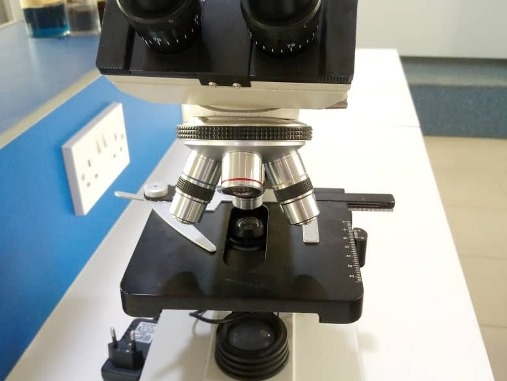
Equipment made available at the laboratory
The Medical Laboratory is equipped with a lot of equippents which are used to teach to students the practical aspect of their study in oder to aid more understanding and knowledge.
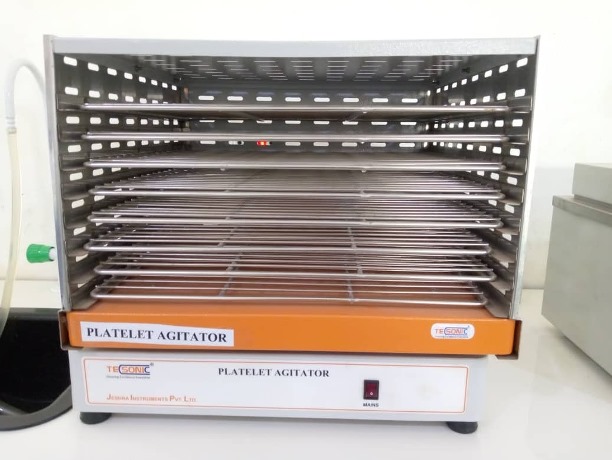
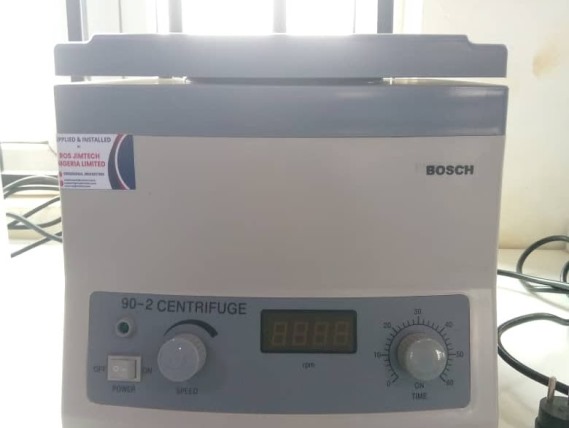
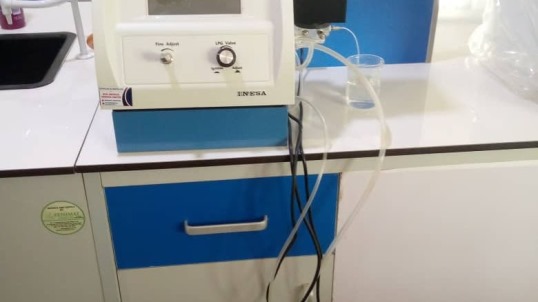

 2024-10-17
 1.38 MB
 1,528
1,528