
LIST OF COUNCIL MEMBERS FROM 2016-2021
YEAR 2016
- Emeritus Prof. J. A. Adekanye Pro-Chancellor/Chairman
- Chief A. O. Ogunshola
- C. D. Jacobs Vice-Chancellor
- O. A. Oyelana Deputy Vice-Chancellor
- Hajiya Zainab Maina
- Anike Oye
- V. O. Awosika
- C. Onyia
- A. E. Falaye
- Oluyemisi Bamgbose
- Comfort Ogunseinde
- (Dr.) O. Okunnuga
- K. Fagbohun Representative of Ogun State Govt.
- E. A. Lawale Registrar/Secretary to Council
YEAR 2017
- Emeritus Prof. J. A. Adekanye Pro-Chancellor/Chairman
- C. D. Jacobs Vice-Chancellor
- O. A. Oyelana Deputy Vice-Chancellor
- Chief A. Ogunsola
- Zainab Maina CON
- Anike Oye
- V. O. Awosika
- C. Onyia
- A. E. Falaye
- Oluyemisi Bamgbose
- Comfort Ogunseinde
- (Dr.) O. Okunnuga
- O. O. Aikulola Representative of Ogun State Govt.
- E. A. Lawale Registrar/Secretary to Council
YEAR 2018
- Emeritus Prof. J. A. Adekanye Pro-Chancellor/Chairman
- Chinedum Babalola Vice-Chancellor
- Emeritus Prof. J. U. Aisiku
- Chief A. Ogunsola
- Zainab Maina (CON)
- Ibironke Adeyemi
- O. Awosika
- Anike Oye
- V. O. Awosika
- C. Onyia
- A. E. Falaye
- Oluyemisi Bamgbose
- Comfort Ogunseinde
- (Dr.) O. Okunnuga
- O. O. Aikulola Representative of Ogun State Govt.
- E. A. Lawale Registrar/Secretary to Council
YEAR 2019
- Emeritus Prof. J. A. Adekanye Pro-Chancellor/Chairman
- Chinedum Babalola Vice-Chancellor
- Chief A. Ogunsola
- Emeritus Prof. J. U. Aisiku
- Zainab Maina (CON)
- Ibironke Adeyemi
- O. Awosika
- C. Onyia
- A. E. Falaye
- Oluyemisi Bamgbose
- Comfort Ogunseinde
- (Dr.) O. Okunnuga
- O. O. Aikulola Representative of Ogun State Govt.
- D. A. Olowola Registrar/Secretary to Council
YEAR 2O20
- Distinguished Prof. Ayodeji O. Olukoju FNAL Pro-Chancellor/Chairman
- Chinedum Babalola Vice-Chancellor
- Chief A. Ogunsola
- Emeritus Prof. J. U. Aisiku
- Zainab Maina (CON)
- Ibironke Adeyemi
- O. Awosika
- Anike Oye
- V. O. Awosika
- A. E. Falaye
- Oluyemisi Bamgbose
- Comfort Ogunseinde
- (Dr.) O. Okunnuga
- W. A. Olanloye Representative of Ogun State Govt.
- D. A. Olowola Registrar/Secretary to Council
YEAR 2021
- Distinguished Prof. Ayodeji O. Olukoju FNAL Pro-Chancellor/Chairman
- Chinedum Babalola Vice-Chancellor
- Emeritus Prof. J. U. Aisiku Member
- Zainab Maina CON Member
- Ibironke Adeyemi Member
- O. Awosika Member
- Anike Oye Member
- V. O. Awosika Member
- A. E. Falaye Member
- Oluyemisi Bamgbose SAN Member
- C. Onyia Member
- Comfort Ogunseinde Member
- (Dr.) O. Okunnuga Member
- O. A. Erinle (Rep. of Ogun State Govt.) Member
- E. O. Aladesuru Ag. Registrar/Secretary
YEAR 2022
- Distinguished Prof. Ayodeji O. Olukoju FNAL Pro-Chancellor/Chairman
- Chinedum Babalola Vice-Chancellor
- Emeritus Prof. J. U. Aisiku Member
- Zainab Maina CON Member
- Ibironke Adeyemi Member
- O. Awosika Member
- Anike Oye Member
- V. O. Awosika Member
- A. E. Falaye Member
- Oluyemisi Bamgbose SAN Member
- C. Onyia Member
- Comfort Ogunseinde Member
- (Dr.) O. Okunnuga Member
- O. Majekodunmi (Rep. of Ogun State Govt.) Member
- S. B. Omotoso, FCIA Registrar/Secretary
YEAR 2023
- Distinguished Prof. Ayodeji O. Olukoju FNAL Pro-Chancellor/Chairman
- Chinedum Babalola Vice-Chancellor
- Prof E. A. Farombi Deputy Vice-Chancellor
- Emeritus Prof. J. U. Aisiku Member
- Zainab Maina CON Member
- Ibironke Adeyemi Member
- O. Awosika Member
- Anike Oye Member
- V. O. Awosika Member
- A. E. Falaye Member
- Oluyemisi Bamgbose SAN Member
- C. Onyia Member
- Comfort Ogunseinde Member
- (Dr.) O. Okunnuga Member
- O. Majekodunmi (Rep. of Ogun State Govt.) Member
- S. B. Omotoso, FCIA Registrar/Secretary
GOVERNING COUNCIL MEMBERSHIP AS AT JUNE 2026
|
1. |
Distinguished Prof Ayodeji O. Olukoju FNAL |
Pro-Chancellor |
Chairman |
|
2. |
Professor Oyedunni Sola Arulogun, FAAS, FSE, FRSPH, FAIPH |
Vice-Chancellor |
Member |
|
3. |
Professor E. O. Farombi, FAS, FAAS |
Deputy Vice-Chancellor |
Member |
|
4. |
Professor A. E. Falaye |
* |
Member |
|
5. |
Emeritus Professor J. U. Aisiku |
* |
Member |
|
6. |
Hon. Zainab Maina, CON |
* |
Member |
|
7. |
Professor Chinedum Peace Babalola |
* |
Member |
|
8. |
Mrs. Ibironke Adeyemi |
* |
Member |
|
9. |
Barrister O. Awosika |
* |
Member |
|
10. |
Mrs. Anike Oye |
* |
Member |
|
11. |
Mr. V. O. Awosika |
* |
Member |
|
12. |
Professor Oluyemisi Bamgbose, SAN |
* |
Member |
|
13. |
Professor C. Onyia |
* |
Member |
|
14. |
Mrs. Olufunke Ogunseinde |
* |
Member |
|
15. |
Ven. Dr. Dele Okunuga |
* |
Member |
|
16. |
Mr. D. Sanusi |
(Representative, National Universities Commission) |
Member |
|
17. |
Prince B. Olateru-Olagbegi |
* |
Member |
|
18. |
Mrs. Abosede Edun |
(Representative, Ogun State Ministry of Education) |
Member |
|
19. |
Mr. S. B. Omotoso, FCIA |
Registrar |
Secretary to Council |
|
IN ATTENDANCE
|
|||
|
21. |
Ms. Kemi Ojo |
Bursar |
|
|
22. |
Mr. E. A. Oyeku |
Internal Auditor |
|
LEGEND
** Yet to be constituted
*Portfolio yet to be attached
ACADEMIC CALENDAR FOR 2024/2025 ACADEMIC SESSION
FIRST SEMESTER
|
October 20th – 22nd 2024 |
Returning students resume |
|
October 24th 2024 |
Senate Meeting |
|
October 28th 2024 |
Convocation Dinner |
|
October 29th 2024 |
5th Convocation Lecture |
|
October 29th 2024 |
5th Convocation Ceremony |
|
October 31st 2024 |
Thanksgiving |
|
November 4th 2024 |
Lectures Begin for 200level- 600level Students |
|
November 6th 2024 |
Special Senate Meeting to welcome the Vice Chancellor |
|
November 7th 2024 |
November Management Meeting |
|
November 12th 2024 |
Committee of Academic Deans (CODD) Meeting |
|
November 14th 2024 |
November Senate Meeting |
|
November 24th 2024 |
New Students Resume |
|
November 25th – 29th 2024 |
Verification of Credentials/Registration |
|
November 25th – 27th 2024 |
Orientation Programme for Freshmen |
|
November 28th 2024 |
Lectures Begin 100level Students |
|
December 5th 2024 |
December Management Meeting |
|
December 6th 2024 |
Registration Ends |
|
December 9th 2024 |
Late Registration with Penalty Begins |
|
December 10th 2024 |
December CODD Meeting |
|
December 12th 2024 |
December Senate Meeting |
|
December 19th 2024 |
Christmas Concert/Carol |
|
December 20th, 2024 – January 2nd 2025 |
Christmas Break |
|
January 3rd 2025 |
Staff’s Resumption from Christmas Break |
|
January 4th – January 5th 2025 |
Student’s Resumption from Christmas Break |
|
January 6th 2025 |
Lectures Begin |
|
January 9th 2025 |
January Management Meeting |
|
January 16th 2025 |
January CODD Meeting |
|
January 20th – January 24th 2025 |
Mid-Semester Tests for 200 - 600level Students |
|
January 23rd 2025 |
January Senate Meeting |
|
February 3rd – 7th 2025 |
Mid-Semester Tests for 100level Students |
|
February 6th - 8th 2025 |
Sports/Student’s Entrepreneurship Week |
|
February 6th 2025 |
February Management Meeting |
|
February 13th 2025 |
February CODD Meeting |
|
February 20th 2025 |
February Senate Meeting |
|
February 17th 2025 |
Freshers party (SRC) |
|
February 24th – 28th 2025 |
Clearance/Revision Week |
|
February 27th 2025 |
Matriculation |
|
March 3rd – March 28th 2025 |
First Semester Examination 200 – 600level Students |
|
March 6th 2025 |
March Management Meeting |
|
March 17th – March 31st 2025 |
First Semester Examination 100level Students |
|
March 31st – April 21sth 2025 |
First Semester Break – Students vacate (3 weeks) |
|
March 31st – April 8th 2025 |
Marking of Examination Scripts |
SECOND SEMESTER
|
April 3rd 2025 |
April Management Meeting |
|
April 9th 2025 |
Submission of Results to the Head of Departments |
|
April 9th – 11th 2025 |
Departmental/ College Board Meeting |
|
April 14th 2025 |
April Senate Meeting– 1st Semester Result Consideration |
|
April 17th 2025 |
April Committee of Academic Deans (CODD) Meeting |
|
April 18th - April 21st 2025 |
Easter – Break for Staff |
|
April 21st 2025 |
All Students Return |
|
April 22nd 2025 |
Registration/Lectures Begin |
|
May 8th 2025 |
May Management Meeting |
|
May 5th – May 9th 2025 |
Departmental/ College Board Meeting |
|
May 9th 2025 |
Course Registration Ends |
|
May 15th 2025 |
Late Registration with Penalty |
|
May 15th 2025 |
May Committee of Deans & Directors Meeting (CODD) |
|
May 16th 2025 |
May Senate Meeting |
|
May 16th 2025 |
Course Registration Ends |
|
May 26th – 30th 2025 |
Mid-Semester Tests |
|
June 5th 2025 |
June Management Meeting |
|
June 12th 2025 |
June CODD Meeting |
|
June 19th 2025 |
June Senate Meeting |
|
June 25th – 26th 2025 |
Chrisland University Inaugural/Public Lecture |
|
July 3rd 2025 |
July Management Meeting |
|
July 10th 2025 |
July CODD Meeting |
|
July 11th 2025 |
Lectures End |
|
July 14th – July 18th 2025 |
Revision Week |
|
July 17th 2025 |
July Senate Meeting |
|
July 21st – August 8th 2024 |
Second Semester Examinations |
|
August 7th 2025 |
August Management Meeting |
|
August 8th 2025 |
Students Vacate |
|
August 8th 2025 – August 15th 2025 |
Marking of Examination Scripts |
|
August 11th – October 24th 2025 |
SIWES/Internship |
|
August 13th - August 18th 2025 |
Proposed Final Year Project Defense |
|
August 14th 2025 |
August CODD Meeting |
|
August 18th 2025 |
Submission of Results to HODs |
|
August 21st 2025 |
August Senate Meeting |
|
August 25th - August 30th 2025 |
Entrepreneurship Training for Final year |
|
August 25th – August 29th 2025 |
Departmental/ College Board |
|
September 1st – October 31st 2025 |
Proposed Leave period for Staff |
|
September 4th 2025 |
September Management Meeting |
|
September 10th 2025 |
September COOD Meeting |
|
September 14th 2025 |
Senate Meeting - Result Consideration for 2nd Semester |
|
September 15th – October 17th 2025 |
2025 Summer Semester (5 weeks) |
|
October 2nd 2025 |
October Management Meeting |
|
October 9th 2025 |
October COOD Meeting |
|
October 16th 2025 |
October Senate Meeting |
|
October 18th – October 19th 2025 |
Resumption 2025/2026 Academic Session – Returning Students |
|
October 27th – October 29th 2025 |
Proposed Convocation |
|
November 1st – November 2nd 2025 |
Resumption 2025/2025 Academic Session - Freshmen |
Want to apply? Click here
COLLEGE OF MANAGEMENT AND SOCIAL SCIENCES
|
SN |
COURSE/DEGREE |
REQUIREMENTS |
UTME SUBJECTS |
|
|
DIRECT ENTRY |
UTME |
|||
|
1. |
PSYCHOLOGY |
Two (2) ‘A’ Level passes including Government or History |
Five (5) SSC credit passes in Government or History, English Language and three (3) other subjects. A pass in Mathematics is required |
Any three (3) subjects from Arts or social Science. |
|
2. |
POLITICAL SCIENCE |
Two (2) ‘A’ Level passes including Government or History |
Five (5) SSC credit passes including Government or History, English Language and three (3) other subjects. A pass in Mathematics is required. |
Government or History plus two (2) other Social Science/Arts subjects. |
|
3. |
INTERNATIONAL RELATIONS |
Two (2) ‘A’ Level passes in Social Science subject from Government/History, Economics, Sociology and Business Management. |
Five (5) SSC credit passes to include English Language, Government or History and three (3) relevant subjects. |
Economics, Literature in English and Geography/Government/ History. |
|
4. |
MASS COMMUNICATION |
Two (2) ‘A’ Level passes in Arts or Social Science subjects. |
Five (5) SSC credit passes in English Language and four (4) other subjects in Arts or Social Sciences. |
Any three (3) from Arts or Social Science subjects. |
|
5. |
ECONOMICS |
Two (2) ‘A’ Level passes in Economics and any one of Mathematics, Statistics, Geography, Physics, Chemistry, Agricultural Science, Accounting, Business Management, History and Government |
Five (5) SSC credit passes in English Language, Mathematics, Economics, and any two (2) of Arts or Social Science subjects. |
Economics, Mathematics and any of Government, History, Geography, Literature in English, French and Christian Religious Studies/Islamic Studies. |
|
6. |
CRIMINOLOGY AND SECURITY STUDIES |
Two (2) ‘A’ Level passes in Economics and any one of Mathematics, Statistics, Geography, Physics, Chemistry, Agricultural Science, Accounting, Business Management, History and Government |
Five (5) SSC credit passes in English Language, Mathematics, Economics, and any two (2) of Arts or Social Science subjects. |
Economics, Mathematics and any of Government, History, Geography, Literature in English, French and Christian Religious Studies/Islamic Studies. |
|
7. |
ACCOUNTING |
Two (2) ‘A’ Level passes including Economics. |
Five (5) SSC credit passes including English Language, Mathematics, Economics and two (2) other relevant subjects. |
Mathematics, Economics and any other Social Science subject. |
|
8. |
BUSINESS ADMINISTRATION |
Two (2) ‘A’ Level passes including Economics. |
Five (5) ‘A’ SSC credit passes including English Language, Mathematics, Economics and two (2) other relevant subjects. |
Mathematics, Economics and any other Social Science subject. |
|
9. |
BANKING AND FINANCE |
i)Two (2) ‘A’ Level passes in Accounting or Economics and one other subject. ii) NCE merit in relevant subjects. iii) ND credit. iv) Foundation International exam such as ICAN, ACCA, ICMA, GPFA. |
Five (5) SSC passes including English Language, Mathematics, Economics and two (2) other relevant subjects. |
Mathematics, one Social Science subject and any other subject. |
|
10. |
ENGLISH |
Two (2) ‘A’ Level passes to include Literature in English and one other Arts subject. |
Five (5) SSC credit passes to include Literature in English, English Language and three other Arts or Social Science subjects. |
Literature in English, one other Arts or Social Science subject. |
COLLEGE OF NATURAL AND APPLIED SCIENCES
|
S/N |
PROGRAMME/ DEGREE AWARDING INSTITUTIONS |
REQUIREMENTS |
UTME SUBJECTS |
|
|
DIRECT ENTRY |
UTME |
|||
|
11. |
BIOCHEMISTRY |
Two (2) ‘A’ Level passes chosen from Chemistry, Mathematics, Physics and Biology. NCE/ND/HND in related programmes plus the UTME requirements. |
Five (5) SSCE passes in English Language, Chemistry, Mathematics, Physics and Biology. |
Biology, Chemistry and Physics or Mathematics. |
|
12. |
BIOTECHNOLOGY |
Two (2) ‘A’ Level passes in Biology/Botany/Zoology and Chemistry and Physics. |
Five (5) SSCE passes in English Language, Chemistry, Mathematics, Physics and Biology. |
Biology, Chemistry and any other Science subject. |
|
13. |
CHEMISTRY |
Two (2) ‘A’ Level passes in Chemistry and any one (1) from Mathematics, Physics and Biology. NCE/ND/HND with good grades in relevant ‘O’ level subjects. |
Five (5) SSCE passes in English Language, Chemistry, Mathematics, Physics and Biology. |
Chemistry and two (2) of Physics, Biology and Mathematics. |
|
14. |
COMPUTER SCIENCE |
Two (2) ‘A’ Level passes in Science subjects including Mathematics. NCE merit in Mathematics and one (1) other Science or Social Science subject. |
Five (5) SSCE passes in English Language, Mathematics, Physics plus two (2) other science subjects. |
Mathematics, Physics and one (1) of Biology, Chemistry, Agric Science, Economics and Geography. |
|
15. |
CYBER SECURITY
|
i)Two (2) ‘A’ Level passes in science subjects including Mathematics. ii) NCE merit in Mathematics and one (1) other Science or Social Science subject. |
Five (5) SSCE passes in English Language, Mathematics, Physics plus two (2) other science subjects. |
Mathematics, Physics and one (1) of Biology, Chemistry, Agric Science, Economics and Geography. |
|
16. |
INDUSTRIAL CHEMISTRY |
Two (2) ‘A’ Level passes in Chemistry and Mathematics. ND in Science Technology or ND in relevant programmes with the UTME requirements. |
Five (5) SSCE passes in English Language, Mathematics, Chemistry, Physics and Biology/Agricultural Science. |
Chemistry, Mathematics and any of Physics, Biology or Agricultural Science. |
|
17. |
MICROBIOLOGY |
Two (2) ‘A’ Level passes in Chemistry any one (1) from Biology, Botany or Zoology. |
Five (5) SSCE passes in English Language, Chemistry, Mathematics, Physics and Biology. |
Biology, Chemistry and either Physics or Mathematics. |
|
18. |
PHYSICS |
NCE/ Two (2) ‘A’ Level passes in Physics and Chemistry or Mathematics. |
Five (5) SSCE passes in English Language, Physics, Mathematics, Chemistry, and any other Science subject from Further Mathematics and Biology or Agricultural Science. |
Physics, Mathematics and Chemistry or Biology |
|
19. |
SOFTWARE ENGINEERING |
Two (2) ‘A’ Level passes in science subjects including Mathematics. NCE merit in Mathematics and one (1) other Science or Social Science subject. |
Five (5) SSCE passes in English Language, Mathematics, Physics plus two (2) other science subjects. |
Mathematics, Physics and one (1) of Biology, Chemistry, Agric Science, Economics and Geography. |
COLLEGE OF BASIC MEDICAL SCIENCES
|
SN |
PROGRAMME/DEGREE AWARDING INSTITUTIONS |
REQUIREMENTS |
UTME SUBJECTS |
|
|
DIRECT ENTRY |
UTME |
|||
|
20. |
NURSING/NURSING SCIENCE
|
(i)Two (2) ‘A’ Level passes in Biology/Zoology, Chemistry and Physics plus three (3) other ‘O’ Level credit passes in Mathematics, Physics and English Language. (ii) NRN or its approved equivalent plus five (5) ‘O’ Level credit passes in English Language and four (4) Science subjects chosen from Mathematics |
Five (5) SSCE credit passes in Mathematics, Chemistry, Biology, Physics and English Language. |
Physics, Chemistry and Biology. |
|
21. |
MEDICAL LABORATORY SCIENCE
|
‘A’ Level passes to include Physics, Chemistry and Biology or Zoology |
Five (5) SSC credit passes in English Language, Mathematics, Physics, Chemistry and Biology |
Physics, Chemistry and Biology |
|
22.
|
PHYSIOTHERAPY |
Two (2) ‘A’ Level passes chosen from Physics, Chemistry and Biology. |
Five (5) SSC credit passes in English Language, Mathematics, Biology, Physics and Chemistry. |
Physics, Chemistry and Biology. |
|
23. |
PUBLIC HEALTH |
Two (2) ‘A’ Level passes chosen from Physics, Chemistry and Biology. |
Five (5) SSC credit passes in English Language, Mathematics, Biology, Physics and Chemistry. |
Physics, Chemistry and Biology. |
COLLEGE OF LAW
|
SN |
COURSE/DEGREE AWARDING INSTITUTIONS |
REQUIREMENTS |
UTME SUBJECTS |
|
|
DIRECT ENTRY |
UTME |
|||
|
24. |
LAW |
Two (2) ‘A’ Level passes in Arts or Social Science subjects. |
Five (5) ‘O’ Level credit passes to include English Language, Literature in English and Mathematics. |
Any three (3) Arts or Social Science subjects. |
Welcome to Chrisland University Library, the Centre of Intellectual Inquiry. The library provides functional and robust physical spaces where users can engage in independent learning in their quest for discovery outside the classroom. In addition, we have fully automated all routine operations and services.
Our virtual library service provides users with remote access to electronic resources, including the Web-based Public Access Catalogue (WebPAC). We welcome you to an exceptional experience as you engage our enthusiastic staff and explore our information resources.
Our Vision
To become a world-class hybrid library that supports teaching, learning, research and scholarship geared towards the outstanding training of a new generation of leaders.
To achieve this vision, the library explores and utilises innovative technologies and services in information services delivery to users anytime and anywhere.
Our Services
- Provision of information resources: our well-stocked library houses a large and diverse collection of academic resources. These include textbooks, reference materials, journals, newspapers and a host of others. Our library staff are readily available to assist users in identifying and locating the resources that meet their information needs.
- E-library Resources: with the library fully automated, we provide remote access to digital resources, such as e-books and e-journals and other important information resources required for teaching, learning and research. The library provides access to online databases. These include Proquest electronic database, Research for Life, Sage Open Journals, Sage Research Methods, IMF data, Global Terrorism Database, ERIC, PNAS and PubMed Central. These databases contain academic content running into hundreds of thousands. These resources can be accessed anytime and anywhere, provided there is internet connection.
- Research Support: The importance of research cannot be overemphasized in the university. To this end, we provide specialised services like selective dissemination of information (SDI) service, plagiarism checks, journal selection support and publications performance measurement for individuals, research clusters and the university.
- Information Literacy Programmes: the library conducts periodic literacy training programmes to assist our users in identifying and locating the information resources they need. The training programmes equip users with skills required for evaluating information sources.
- Reading Spaces: the library offers a variety of reading spaces. This includes general reading spaces, single study rooms and tutorial rooms.
- Seminars/webinars: the library conducts seminars and webinars on issues of interest to users in particular and the academic community in general.
Explore Our Resources
We invite all members of the university community to explore our information resources and services. You can search our online catalogue through the link:https://chrislanduniversitylibrary.librarika.com
Our Team
Our staff consists of seasoned professionals and para-professionals who are dedicated and committed to providing efficient information services delivery 24/7
Opening Hours
- Monday - Friday: 8am - 8pm
- Saturdays: 10am - 6pm
- Sundays and Public Holidays: Closed
*Our virtual library services run 24/7
We look forward to getting enquiries and feedback from you. You can contact us through email:
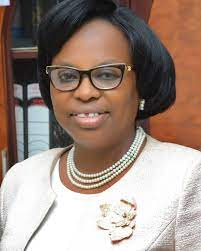 Professor (Mrs.) Chinedum Peace Babalola
Email:
Professor (Mrs.) Chinedum Peace Babalola hails from the family of Sir. Dr. Isaac Ebere & late Lady Adeline Anyabuike from Imo State, Nigeria. She is a Pharmacist, a distinguished Professor of Pharmaceutical Chemistry/Pharmacokinetics and the immediate past Dean of Faculty of Pharmacy, University of Ibadan. She attended University of Ife (now Obafemi Awolowo University - OAU) to obtain her Bachelor of Pharmacy (1983), M.Sc. (1987) and PhD (1997) in Pharmaceutical Chemistry (Pharmacokinetics option). She proceeded to University of British Columbia, Vancouver, Canada for a pre-doctoral fellowship between 1994 and 1995.
 Ayodotun Stephen IBIDUNNI (PhD, FCIA)
Director, CELDS
Email:
Phone: +2348034893637
The Chrisland University Centre for Entrepreneurship and Leadership Development Studies (CELDS) was created in March 2020 (at that time known as the Centre for Entrepreneurship Development Studies). The Centre is a Unit in the Office of the Vice Chancellor, Chrisland University. At the time of its Creation, the Centre had Dr. Babatunde Agbi as the Director of the Centre, and a Lecturer in the Department of Business Administration. In November 2021, Dr. Ayodotun Stephen Ibidunni, a Senior Lecturer and Head of Department, Business Administration Department was appointed as the Director of the Centre. Upon the mandate given to the new Director by the Vice Chancellor, to solidify existing activities in the Centre and introduce new and innovative strategic activities, Dr A.S. Ibidunni began by conceptualizing the vision and mission of the centre as:
The Vision of Chrisland University's CELDS is to cultivate innovative and future thinking problem solvers and wealth creators out of all CLU students and the University's community.
Our Mission is to utilise a blend of entrepreneurial mindset cultivating approaches, skills and teaching methodologies to raise dynamic entrepreneurial thinkers that contribute to solving socio-economic challenges and transforming livelihood for the good of all.
The carefully crafted vision and mission statements of the CELDS were guided by the strategic position which the Chrisland University vision places on entrepreneurship and innovation. It was also at this time that Dr A.S. Ibidunni proposed to the University Management, at its Management Meeting, and to the University Senate, about the renaming of the Centre to its present Centre for Entrepreneurship and Leadership Development Studies (CELDS), which was approved. The change of name was necessitated by the need to incorporate two uniquely taught courses in Chrisland University, including, entrepreneurship and leadership.
CELDS Vision
The Vision of Chrisland University's CELDS is to cultivate innovative and future thinking problem solvers and wealth creators out of all CLU students and the University's community.
CELDS Mission
Our Mission is to utilise a blend of entrepreneurial mindset cultivating approaches, skills and teaching methodologies to raise dynamic entrepreneurial thinkers that contribute to solving socio-economic challenges and transforming livelihood for the good of all.
CELDS Programmes
Technovation Summit
The Technovation Summit serves as a platform for showcasing innovations which aim at solving socio-economic challenges facing Nigeria, Africa and the global communities. As an annual programme we hope that the Technovation Summit will be positioned as an annual gathering of entrepreneurs, researchers, students, and delegates from businesses, academia, and other parties from within and outside Nigeria.
The maiden edition of Technovation Summit held in the year 2022 with the theme “Technology for Better Life: Transforming Society for Quality Livelihood”; it was a platform for robust discussions on knowledge driven entrepreneurship, and to encourage the application of global best practices in entrepreneurial eco-system to the Nigerian and the African context. The event had in attendance a lineup of experienced entrepreneurs as speakers sourced from Nigeria and abroad that shared with the audience from their wealth of experiences in the entrepreneurship and start-up space.
Chrisland University Sustainability Project (CLUSP)
The Chrisland University Sustainability Project (CLUSP) has a focus of connecting entrepreneurship teaching and theory into student generated sustainable development products and ideas that solve critical real life problems. We are value oriented with this project and I believe that it will indeed drive home the desired result both for Chrisland University and for our global community.
CELDS initiated this project when the first edition held in the year 2022. The first edition of CLUSP produced a total of 20 innovative ideas that serve as potential companies from the 300 Level 2021/2022 Entrepreneurship Class of Chrisland University. In CLUSP, students are clustered into a team-based project development entrepreneurial activity. Each team is multidisciplinary in scope. Each team will act as a demo company/enterprise. Their task will be to identify a problem in society that they will solve. Their solution will be developed into a product and continuously progress unto the selling stage. Each company in the CLUEV will be graded based on market potential, testable by the sales of its product. Ideas generated are related to sustainability projects: Eco-friendly Business (waste recycling, eco-friendly production processes), Sustainable construction materials (3D homes), Green house cleaning products (using all-natural and eco-friendly cleaning products), Technology that enhances service delivery timelines (AI adoption), Renewable plastics, and Technology adoption for food preservation, food distribution, and to support agricultural output
CELDS Trainings
CELDS offers a range of training topics and skills in the form of:
- Vocational Courses
- Certificate Courses (1 – 3 days)
- Diploma Courses (1 – 3 months)
List of Staff at the Centre
1. Ayodotun Stephen IBIDUNNI (PhD, FCIA) Director, CELDS
 Dr. Solomon O. Okunade
Director, CELDS
Email:
Phone: +2348032335789
The Chrisland Centre for Research and Statistics (CREST), Abeokuta, Nigeria was founded in August, 2021 by the Office of the Vice Chancellor in collaboration with the Carnegie Fellow to the University, Dr. Olu Awosoga. It was formally constituted as the Chrisland University Statistical Centre (CRISTAC) to entrench the understanding of statistical analyses and packages in the education of students and staff of Chrisland University.
The centre was established and funded alongside the Carnegie Fellow during his visit to Nigeria. The Centre has been of immense benefits as consulting room to students and staff across all colleges. Presently, the Centre has been constituted into an interdisciplinary Research Centre with emphasis on service oriented policy research under the overall direction of the Centre’s Director.
The instrument establishing the Centre enables it to draw its Research Fellows, and clusters/groups from various disciplines both from within and outside the University. The Research Centre has no formal academic teaching programmes. Its Research Fellows discharge their teaching obligations as members of faculty of their various academic departments, while its Research Assistants are hired as the need arises and required to be registered Ph.D. candidates from various academic departments. The Research Fellows and clusters relate at the Centre to execute the Centre’s research programmes under the supervision of the Centre’s Director, assisted by specific Research Clusters’ Coordinators.
Objectives
The objectives of the Centre include but not limited to:
- Organising trainings for students and staff of the University;
- Guiding students to carry out statistical analysis for their projects;
- Guiding staff to carry out statistical analyses for aid research and publications;
- Attract the general public to the University and assist them with their statistical analyses with negotiable fees.
Apart from the physical trainings, the Centre has also been charged with responsibilities of organising series of virtual hand-on trainings for the benefit of the University community.
Achievements
Since its inception, the Centre has been able to organise series of hand-on trainings such as Workshop, Conferences, and Seminars and so on for the staff. Achievements of the Center include the following:
- Conducted and published a Carnegie African Diaspora’s sponsored Multidisciplinary Research titled “Impact analysis of pandemic on Nigeria’s stock market performance.” Research in Applied Economics, 14(2), 17-42. MacroThink, USA. Carnegie Sponsored Research. https://doi.org/10.5296/rae.v14i2.20560.
- Organised series of virtual hand-on trainings in partnership with other institutions across the globe;
- Organised bi-annual workshop on Advanced Statistical Techniques for Researchers for Staff;
- Annual training for final year students and staff on SPSS for Beginners (Primary data analyses);
- Annual training for the final year students and staff on EVIEWS for Beginners (Secondary data analyses);
- Trained some interested students to help others at the Centre;
- Guided the final-year students in carrying out their project analyses and interpretations.
Tasks and Responsibilities
With a view to cordinating the University research and grant-writing activities as well as the publications by academic staff members and cluster groups, the Centre has been upgraded to ensure proper coordination and documentation in the repository so as to put Chrisland University in the limelight and grease the wheels of research development while gaining its deserved recognition on a global level. Thus, the Centre is charged to perform the following responsibilities:
- Creation of the University Research Repository: This enables proper coordination of all research activities and publications of academic members. It also helps in linking these publications to the Chrisland University Website which is visible and traceable across the world.
- Coordination and monitoring of the Research Publications and Grant-Writing Cluster Groups to ensure efficient, effective, and result-oriented grant-writing activities.
- Also among the top priorities of the Centre is the facilitation of procedures that ensure paper publications in top-rated journals among faculty and staff of the university.
- Research fund-raising, application, and management.
- Possible inclusion of Chrisland University in global University ranking platforms such as Times Higher Education, Webometric Ranking, and AD Scientific.
To accomplish the goal of getting Chrisland University to be ranked in globally reputable platforms, the Centre would become more deliberate about transforming into executing and publishing impact driven research, and in high impact journal outlets. Usually Scopus and Web of Science indexations provide a rich repository of multidisciplinary academic research journals that can serve as a starting point to achieving the global ranking of Chrisland University. Also, the Centre would continue to register voluntary research clusters. The functional roles of research clusters include publishing of journals papers in high impact outlets, writing grant proposals, and frequently organizing strategically designed research workshops at the University, College and Departmental levels.
Finally, Chrisland University, through the Center would be deliberate about supporting its faculty and staff to attend local and international conferences where papers on the condition that such faculty and staff member’s paper has been accepted for presentation and inclusion in the Conference Proceedings.
Consultations
The Center is open for consultation for students and staff as well as the general public on a daily basis for three hours per day and on special schedule for general public.
Consultation Hours
|
DAY |
TIME |
HOURS |
|
MONDAY |
3 – 6 PM |
3 HOURS |
|
TUESDAY |
3 – 6 PM |
3 HOURS |
|
WEDNESSDAY |
3 – 6 PM |
3 HOURS |
|
THURSDAY |
3 – 6 PM |
3 HOURS |
|
FRIDAY |
4 – 6 PM |
2 HOURS |
|
SATURDAY |
ON SCHEDULE |
|
Research and Collaboration
The Center is open to multidisciplinary research and collaboration from every spheres of human existence especially on innovative projects that can have measurable impact and can create meaningful, transformative change in diverse areas, such as Education, Democracy, Economic Development and Growth, International peace and security, Higher education, Health, Aging, Human Rights, Advancing Children's Rights and Research in Africa.
List of Staff at the Centre
1. Dr. Solomon O. Okunade Director, CREST
 Prof. Kola Babarinde
Director, CETL
Email:
Phone: +2348033223932
You are warmly welcome to the Centre for Excellence in Teaching and Learning of Chrisland University, Abeokuta, Ogun State. This is a service centre which offers continuous training to academic staff to support them in their teaching activities. Since the goal of teaching is effective learning and satisfaction of our students to have enjoyable and memorable experience from this university, Chrisland University places high premium on our students' satisfaction and success and will continuously update the knowledge and competence of our teachers through this Centre.
Our mandate therefore is faculty development for teachers of this university and beyond. We are also committed to community service beyond our staff as we are open to offering similar services to teachers in schools, colleges, universities and other educational institutions in the country. Feel free to interact with us and join us in making teaching 21st century compliant for efficient and satisfactory learning.
Vision and Mission of the Centre for Excellence in Teaching and Learning
In recognition of the importance of the pedagogical mandate of her lecturers, and in further recognition that many of the academic staff members may not have had formal professional preparation in teaching, the university recently approved the establishment of the Centre for Excellence in Teaching and Learning (CETL).
The Vision of the Centre is to be a leading centre for capacity building in all aspects of school, undergraduate and graduate teaching with a view to achieving 21st century excellence in students’ competency learning.
The Mission is to establish and operate a centre for excellence in teaching and learning for Pedagogical Leadership for future ready teachers in public and private educational institutions.
List of Activities of the Directorate
- Core Curriculum Minimum Academic Standards (CCMAS) Workshop
- Creating awareness and commitment to the university vision and mission iii. Development of the university pedagogical policy
- Workshop on How to develop Personal Teaching Philosophy statements
- Uses and application of the university Learning Management System (LMS)
- Institutionalization of best practices in academic staff continuous capacity development
Collaborations
The Centre for Excellence in Teaching and Learning collaborated with the Curriculum Development Committee (CDC) in achieving the Core Curriculum Minimum Academic Standards (CCMAS) Workshop which was a success as participant took part in group work, practicals and at the end of the workshop they all got Certified.
Accomplishments
Upon the inauguration of the Centre for Excellence in Teaching and Learning which took place on the 9th February 2023, the Centre has been able to accomplish;
- The key component of Curriculum review and development: Objectives vs learning outcomes ii. The general principles and guidelines of CCMAS
- The quality assurance guides for CCMAS 30%
- The development of Pedagogical Policy for the University
List of Staff at the Centre
1. Prof. Kola Babarinde Director, CETL
